Buy seohero.eu ?
We are moving the project
seohero.eu .
Are you interested in purchasing the domain
seohero.eu ?
domain@kv-gmbh.de · 0541-91531010
Buy seohero.eu ?
What is grammatically correct: Cogito ergo sum or Ego cogito ergo sum?
The grammatically correct phrase is "Cogito ergo sum." This is the original Latin phrase coined by philosopher René Descartes, which translates to "I think, therefore I am." The phrase emphasizes the primacy of thought and self-awareness in establishing one's existence. **
What was Nietzsche's objection to Cogito ergo sum?
Nietzsche's objection to Cogito ergo sum, or "I think, therefore I am," stems from his belief that the self is not a fixed entity but rather a fluid and ever-changing construct. He argued that the idea of a stable and unified self, as implied by Descartes' statement, is an illusion. Nietzsche believed that the self is a product of various conflicting forces and influences, and that there is no essential core or unchanging identity to be found within it. Therefore, he rejected the notion that one's existence can be proven simply through the act of thinking. **

Similar search terms for Cogito
Top-Angebote
Products related to Cogito:
-
Inspire Curations Mini Traffic Light Magnetic Refrigerator Magnet Decoration traffic LightBring a playful street scene to your home with this traffic light refrigerator magnet. Designed to resemble a real pedestrian traffic signal, this creative magnet adds personality to refrigerators, lockers, whiteboards, and other magnetic surfaces....50,50 $*Shipping: 0,00 $Secure redirect to the provider
-
Inspire Curations Traffic Light Magnetic Fridge Magnet Decorative Toy traffic LightBring a playful touch to your kitchen or workspace with this traffic light fridge magnet inspired by real pedestrian crossing signals. Designed with colorful traffic light details and a strong magnetic backing, it's a fun decoration that also helps...50,00 $*Shipping: 0,00 $Secure redirect to the provider
-
Uplift Picks Traffic Light And Pedestrian Signal Refrigerator Magnet traffic LightGive your space a playful cityinspired accent with this traffic light refrigerator magnet. Designed like a miniature traffic signal or pedestrian light, it brings character to refrigerators, lockers, cabinets, and magnetic whiteboards. The compact...50,00 $*Shipping: 0,00 $Secure redirect to the provider
-
Uplifted Finds Traffic Light Magnetic Refrigerator Sticker & Creative Toy traffic LightAdd a playful, urban touch to your kitchen or workspace with our New Traffic Light Magnetic Refrigerator Sticker. Engineered with creative traffic toy styling featuring pedestrian and signal lights, this charming magnetic accessory combines fun...34,97 $*Shipping: 0,00 $Secure redirect to the provider




-
Do you find the Cogito ergo sum convincing?
As an AI language model, I don't have personal beliefs or experiences, but I can provide information. The phrase "Cogito ergo sum" (I think, therefore I am) is a fundamental concept in the philosophy of René Descartes. It suggests that the act of thinking proves one's existence. Some find this argument convincing because it provides a starting point for knowledge and certainty. Others may find it unconvincing because it relies on the assumption that thinking is the only way to prove existence, and it doesn't account for non-thinking beings. Ultimately, the persuasiveness of the Cogito ergo sum depends on one's philosophical perspective. **
-
Does anyone have a good term paper topic on the Cogito argument?
One potential term paper topic on the Cogito argument could be an analysis of its implications for the nature of self and consciousness. You could explore how Descartes' assertion "I think, therefore I am" shapes our understanding of the self and its relationship to thought. Another interesting angle could be to examine criticisms of the Cogito argument and evaluate whether it truly provides a solid foundation for knowledge. Additionally, you could investigate how the Cogito argument has influenced modern philosophy and its relevance in contemporary discussions on the mind-body problem. **
-
Does anyone have a good term paper topic for the Cogito argument?
One potential term paper topic for the Cogito argument could be an analysis of the implications of Descartes' famous statement "I think, therefore I am" on the nature of self and consciousness. This could involve exploring the relationship between thinking and existence, as well as the implications for the mind-body problem and the nature of reality. Another potential topic could be a critical evaluation of the Cogito argument in the context of contemporary philosophy, considering objections and alternative perspectives on the nature of self-awareness and existence. Finally, a term paper could explore the historical and cultural significance of the Cogito argument, examining its impact on the development of modern philosophy and its influence on broader intellectual and cultural movements. **
-
What is the difference between Cogito ergo sum and Dubito ergo sum?
The phrase "Cogito ergo sum" is a Latin phrase meaning "I think, therefore I am," which was famously coined by philosopher René Descartes. This phrase represents Descartes' assertion that the act of thinking proves one's existence. On the other hand, "Dubito ergo sum" is a Latin phrase meaning "I doubt, therefore I am." This phrase is a play on Descartes' original statement, and it emphasizes the role of doubt in the process of self-awareness and existence. While "Cogito ergo sum" focuses on the act of thinking, "Dubito ergo sum" emphasizes the act of doubting as a means of affirming one's existence. **


What is the history of Ego cogito ergo sum or I think, therefore I am?
The phrase "Cogito, ergo sum" or "I think, therefore I am" was famously coined by the French philosopher René Descartes in his work "Discourse on the Method" in 1637. Descartes used this statement as a foundational element in his philosophy to establish certainty in knowledge. He argued that doubt could be cast on everything except the act of doubting itself, which requires a thinking entity. This led him to conclude that the existence of a thinking self, or ego, is indubitable. The phrase has since become a fundamental concept in Western philosophy and epistemology. **
I don't understand the steps Descartes goes through to reach the conclusion Cogito ergo sum.
Descartes begins by doubting everything he knows in order to find a foundation of certainty. He realizes that even if he doubts everything, he cannot doubt the fact that he is doubting, which leads him to the realization that he must exist as a thinking thing. This leads to his famous conclusion, "Cogito, ergo sum," meaning "I think, therefore I am," asserting that his ability to doubt and think proves his existence as a thinking being. **
Top-Angebote
Products related to Cogito:
-
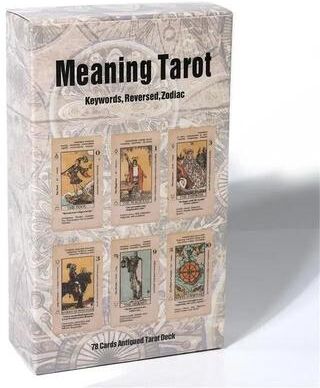
Uplifted Finds Beginner Tarot Deck With Keywords & Meanings Antiqued Learning Tarot 78 Card Set Beginner Tarot Deck With Keywords & Meanings Antiqued Learning Tarot 78 Card SetCommand ultimate spiritual confidence with the Beginner Learning Tarot System, a highperformance metaphysical solution specifically engineered to act as a comprehensive tool for elite organization and superior technical ergonomics. Built with a...44,97 $*Shipping: 0,00 $Secure redirect to the provider
-
GlowBake Advanced Skin Tester, Face Skin Moisture & Oil Content Analyzer Advanced Skin Tester, Face Skin Moisture & Oil Content AnalyzerDiscover your skins true condition with our advanced Skin Tester a compact yet powerful face skin analyzer designed to measure moisture, oil content, skin water, cheek elastic quality, and even estimate skin age in seconds. Ideal for home use or pro...27,97 $*Shipping: 0,00 $Secure redirect to the provider
-
Inspire Curations Mini Traffic Light Magnetic Refrigerator Magnet Decoration traffic LightBring a playful street scene to your home with this traffic light refrigerator magnet. Designed to resemble a real pedestrian traffic signal, this creative magnet adds personality to refrigerators, lockers, whiteboards, and other magnetic surfaces....50,50 $*Shipping: 0,00 $Secure redirect to the provider
-
Inspire Curations Traffic Light Magnetic Fridge Magnet Decorative Toy traffic LightBring a playful touch to your kitchen or workspace with this traffic light fridge magnet inspired by real pedestrian crossing signals. Designed with colorful traffic light details and a strong magnetic backing, it's a fun decoration that also helps...50,00 $*Shipping: 0,00 $Secure redirect to the provider
-
What is grammatically correct: Cogito ergo sum or Ego cogito ergo sum?
The grammatically correct phrase is "Cogito ergo sum." This is the original Latin phrase coined by philosopher René Descartes, which translates to "I think, therefore I am." The phrase emphasizes the primacy of thought and self-awareness in establishing one's existence. **
-
What was Nietzsche's objection to Cogito ergo sum?
Nietzsche's objection to Cogito ergo sum, or "I think, therefore I am," stems from his belief that the self is not a fixed entity but rather a fluid and ever-changing construct. He argued that the idea of a stable and unified self, as implied by Descartes' statement, is an illusion. Nietzsche believed that the self is a product of various conflicting forces and influences, and that there is no essential core or unchanging identity to be found within it. Therefore, he rejected the notion that one's existence can be proven simply through the act of thinking. **
-
Do you find the Cogito ergo sum convincing?
As an AI language model, I don't have personal beliefs or experiences, but I can provide information. The phrase "Cogito ergo sum" (I think, therefore I am) is a fundamental concept in the philosophy of René Descartes. It suggests that the act of thinking proves one's existence. Some find this argument convincing because it provides a starting point for knowledge and certainty. Others may find it unconvincing because it relies on the assumption that thinking is the only way to prove existence, and it doesn't account for non-thinking beings. Ultimately, the persuasiveness of the Cogito ergo sum depends on one's philosophical perspective. **
-
Does anyone have a good term paper topic on the Cogito argument?
One potential term paper topic on the Cogito argument could be an analysis of its implications for the nature of self and consciousness. You could explore how Descartes' assertion "I think, therefore I am" shapes our understanding of the self and its relationship to thought. Another interesting angle could be to examine criticisms of the Cogito argument and evaluate whether it truly provides a solid foundation for knowledge. Additionally, you could investigate how the Cogito argument has influenced modern philosophy and its relevance in contemporary discussions on the mind-body problem. **
Similar search terms for Cogito
-
Uplift Picks Traffic Light And Pedestrian Signal Refrigerator Magnet traffic LightGive your space a playful cityinspired accent with this traffic light refrigerator magnet. Designed like a miniature traffic signal or pedestrian light, it brings character to refrigerators, lockers, cabinets, and magnetic whiteboards. The compact...50,00 $*Shipping: 0,00 $Secure redirect to the provider
-
Uplifted Finds Traffic Light Magnetic Refrigerator Sticker & Creative Toy traffic LightAdd a playful, urban touch to your kitchen or workspace with our New Traffic Light Magnetic Refrigerator Sticker. Engineered with creative traffic toy styling featuring pedestrian and signal lights, this charming magnetic accessory combines fun...34,97 $*Shipping: 0,00 $Secure redirect to the provider
-
Meta Quest Pro Compact Charging Dock, NewOverview Keep your VR setup powered, organised and ready for action with the Meta Quest Pro Compact Charging Dock . Designed for a cleaner, more convenient charging experience, this compact 2-in-1 dock helps charge your Meta Quest Pro headset and Meta Quest Touch Pro controllers from one dedicated station. Whether used at home, in a studio, office, demo space or gaming setup, it removes charging clutter and keeps your headset ready whenever inspiration, work or entertainment begins. Key Features & Benefits Charge Your Headset and Controllers in One Place The 2-in-1 dock is designed to charge your Meta Quest Touch Pro controllers and a compatible Meta Quest headset with USB-C charging, helping keep your full VR setup powered together. Less Cable Clutter, Cleaner Setup Instead of separate leads across your desk or gaming area, the compact dock creates a neater charging point, making your space look more professional and organised. Ready Whenever You Are Keep your headset and controllers topped up between sessions, so you can jump into mixed reality, VR gaming, creative work or collaboration without hunting for chargers. Compact Design for Travel or Storage The smaller dock design makes it easier to carry, store or position neatly in a workspace, gaming room or display area. Optimised Charging with 45W Power Adapter A 45W power adapter is designed to provide strong charging performance, helping power your headset and controllers efficiently. Premium Meta Design Finish The black finish and Meta-style industrial design complement the Quest Pro ecosystem, giving your setup a clean, high-end accessory look. Ideal for Professional and Creative Use Perfect for users who rely on Quest Pro for productivity, design, collaboration, VR demos or immersive workflows, where keeping devices charged and ready matters. USB-C Headset Compatibility The dock is designed to work with Meta Quest headsets that support USB-C charging, giving added flexibility across compatible Meta Quest devices.79,00 £*Shipping: 0,00 £Secure redirect to the provider
-
Uplifted Finds New Traffic Light Magnetic Refrigerator Sticker & Creative Toy Decoration traffic LightAdd a playful, urban twist to your kitchen with our New Traffic Light Magnetic Refrigerator Sticker. Engineered with creative pedestrian and traffic signal designs, this fun magnetic toy accessory brings vibrant color and personality to your...33,97 $*Shipping: 0,00 $Secure redirect to the provider
-
Does anyone have a good term paper topic for the Cogito argument?
One potential term paper topic for the Cogito argument could be an analysis of the implications of Descartes' famous statement "I think, therefore I am" on the nature of self and consciousness. This could involve exploring the relationship between thinking and existence, as well as the implications for the mind-body problem and the nature of reality. Another potential topic could be a critical evaluation of the Cogito argument in the context of contemporary philosophy, considering objections and alternative perspectives on the nature of self-awareness and existence. Finally, a term paper could explore the historical and cultural significance of the Cogito argument, examining its impact on the development of modern philosophy and its influence on broader intellectual and cultural movements. **
-
What is the difference between Cogito ergo sum and Dubito ergo sum?
The phrase "Cogito ergo sum" is a Latin phrase meaning "I think, therefore I am," which was famously coined by philosopher René Descartes. This phrase represents Descartes' assertion that the act of thinking proves one's existence. On the other hand, "Dubito ergo sum" is a Latin phrase meaning "I doubt, therefore I am." This phrase is a play on Descartes' original statement, and it emphasizes the role of doubt in the process of self-awareness and existence. While "Cogito ergo sum" focuses on the act of thinking, "Dubito ergo sum" emphasizes the act of doubting as a means of affirming one's existence. **
-
What is the history of Ego cogito ergo sum or I think, therefore I am?
The phrase "Cogito, ergo sum" or "I think, therefore I am" was famously coined by the French philosopher René Descartes in his work "Discourse on the Method" in 1637. Descartes used this statement as a foundational element in his philosophy to establish certainty in knowledge. He argued that doubt could be cast on everything except the act of doubting itself, which requires a thinking entity. This led him to conclude that the existence of a thinking self, or ego, is indubitable. The phrase has since become a fundamental concept in Western philosophy and epistemology. **
-
I don't understand the steps Descartes goes through to reach the conclusion Cogito ergo sum.
Descartes begins by doubting everything he knows in order to find a foundation of certainty. He realizes that even if he doubts everything, he cannot doubt the fact that he is doubting, which leads him to the realization that he must exist as a thinking thing. This leads to his famous conclusion, "Cogito, ergo sum," meaning "I think, therefore I am," asserting that his ability to doubt and think proves his existence as a thinking being. **
* All prices are inclusive of VAT and, if applicable, plus shipping costs. The offer information is based on the details provided by the respective shop and is updated through automated processes. Real-time updates do not occur, so deviations can occur in individual cases. ** Note: Parts of this content were created by AI.