Buy seohero.eu ?
We are moving the project
seohero.eu .
Are you interested in purchasing the domain
seohero.eu ?
domain@kv-gmbh.de · 0541-91531010
Buy seohero.eu ?
How can one determine antiderivatives?
One can determine antiderivatives by using the reverse process of differentiation. This involves finding a function whose derivative is equal to the given function. One common method is to use integration rules and techniques such as substitution, integration by parts, and partial fractions. It is also important to remember that antiderivatives are not unique, as they can differ by a constant term. **
Can you explain the antiderivatives?
Antiderivatives are the reverse operation of derivatives. They are functions that, when differentiated, yield a given original function. In other words, an antiderivative of a function f(x) is a function F(x) whose derivative is equal to f(x). The process of finding antiderivatives is called antidifferentiation or integration. Antiderivatives are important in calculus and are used to solve problems involving finding the original function from its derivative. **


Similar search terms for Antiderivatives
Top-Angebote
Products related to Antiderivatives:
-
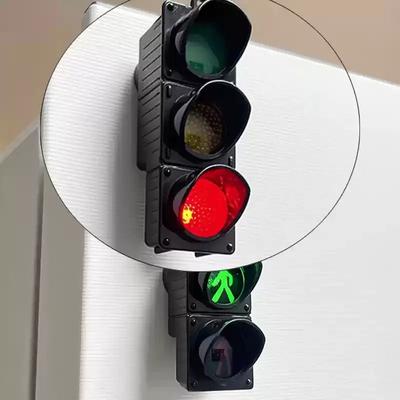
Inspire Curations Traffic Light Magnetic Fridge Magnet Decorative Toy traffic LightBring a playful touch to your kitchen or workspace with this traffic light fridge magnet inspired by real pedestrian crossing signals. Designed with colorful traffic light details and a strong magnetic backing, it's a fun decoration that also helps...50,00 $*Shipping: 0,00 $Secure redirect to the provider
-
Uplifted Finds Traffic Light Magnetic Refrigerator Sticker & Creative Toy traffic LightAdd a playful, urban touch to your kitchen or workspace with our New Traffic Light Magnetic Refrigerator Sticker. Engineered with creative traffic toy styling featuring pedestrian and signal lights, this charming magnetic accessory combines fun...34,97 $*Shipping: 0,00 $Secure redirect to the provider
-
Inspire Curations Mini Traffic Light Magnetic Refrigerator Magnet Decoration traffic LightBring a playful street scene to your home with this traffic light refrigerator magnet. Designed to resemble a real pedestrian traffic signal, this creative magnet adds personality to refrigerators, lockers, whiteboards, and other magnetic surfaces....50,50 $*Shipping: 0,00 $Secure redirect to the provider
-
GlowBake Advanced Skin Tester, Face Skin Moisture & Oil Content Analyzer Advanced Skin Tester, Face Skin Moisture & Oil Content AnalyzerDiscover your skins true condition with our advanced Skin Tester a compact yet powerful face skin analyzer designed to measure moisture, oil content, skin water, cheek elastic quality, and even estimate skin age in seconds. Ideal for home use or pro...27,97 $*Shipping: 0,00 $Secure redirect to the provider



-
Why are there infinitely many antiderivatives?
There are infinitely many antiderivatives because when we find the antiderivative of a function, we are essentially finding a family of functions that all have the original function as their derivative. This family of functions can be obtained by adding any constant value to the antiderivative, resulting in an infinite number of possible antiderivatives. This is due to the fact that the derivative of a constant is always zero, so adding a constant to the antiderivative does not change its derivative. Therefore, there are infinitely many antiderivatives for a given function. **
-
How does integral calculus work with antiderivatives?
Integral calculus works with antiderivatives by finding the function whose derivative is the given function. This process is known as finding the antiderivative or indefinite integral of the function. The notation used for antiderivatives is the integral symbol followed by the function and a differential variable, such as ∫f(x)dx. By finding the antiderivative of a function, we can then use it to calculate the area under the curve of the original function, which is the fundamental concept of integral calculus. **
-
How do you calculate the antiderivatives of functions?
To calculate the antiderivatives of functions, you need to reverse the process of differentiation. This involves finding a function whose derivative is the original function. You can use integration rules and techniques such as power rule, substitution, integration by parts, and trigonometric identities to find the antiderivative. Remember to include the constant of integration (C) when finding the antiderivative as it accounts for all possible constant values. **
-
Provide the equation of all antiderivatives of f.
The equation of all antiderivatives of f can be represented as F(x) = ∫f(x)dx + C, where F(x) is the antiderivative of f(x), ∫ represents the integral symbol, dx indicates the variable of integration, and C is the constant of integration. This equation accounts for the fact that antiderivatives differ by a constant term, which is why the constant of integration, C, is included in the equation. **


Provide the equation for all antiderivatives of f.
The equation for all antiderivatives of a function f is given by F(x) = ∫f(x) dx + C, where F(x) is the antiderivative of f(x), ∫ represents the integral symbol, dx denotes the variable of integration, and C is the constant of integration. This equation represents the family of functions that differ by a constant value, as the constant of integration accounts for the infinite number of antiderivatives that can be obtained by adding any constant to the result of the integral. **
What is the power of derivatives and antiderivatives?
Derivatives and antiderivatives are powerful tools in calculus that allow us to analyze the rate of change of a function and find the original function, respectively. Derivatives help us understand how a function is changing at any given point, while antiderivatives help us find the original function when only the rate of change is known. Together, they provide a comprehensive understanding of functions and their behavior, making them essential in various fields such as physics, engineering, economics, and more. **
Top-Angebote
Products related to Antiderivatives:
-
Uplifted Finds Beginner Tarot Deck With Keywords & Meanings Antiqued Learning Tarot 78 Card Set Beginner Tarot Deck With Keywords & Meanings Antiqued Learning Tarot 78 Card SetCommand ultimate spiritual confidence with the Beginner Learning Tarot System, a highperformance metaphysical solution specifically engineered to act as a comprehensive tool for elite organization and superior technical ergonomics. Built with a...44,97 $*Shipping: 0,00 $Secure redirect to the provider
-
Uplift Picks Traffic Light And Pedestrian Signal Refrigerator Magnet traffic LightGive your space a playful cityinspired accent with this traffic light refrigerator magnet. Designed like a miniature traffic signal or pedestrian light, it brings character to refrigerators, lockers, cabinets, and magnetic whiteboards. The compact...50,00 $*Shipping: 0,00 $Secure redirect to the provider
-
Inspire Curations Traffic Light Magnetic Fridge Magnet Decorative Toy traffic LightBring a playful touch to your kitchen or workspace with this traffic light fridge magnet inspired by real pedestrian crossing signals. Designed with colorful traffic light details and a strong magnetic backing, it's a fun decoration that also helps...50,00 $*Shipping: 0,00 $Secure redirect to the provider
-
Uplifted Finds Traffic Light Magnetic Refrigerator Sticker & Creative Toy traffic LightAdd a playful, urban touch to your kitchen or workspace with our New Traffic Light Magnetic Refrigerator Sticker. Engineered with creative traffic toy styling featuring pedestrian and signal lights, this charming magnetic accessory combines fun...34,97 $*Shipping: 0,00 $Secure redirect to the provider
-
How can one determine antiderivatives?
One can determine antiderivatives by using the reverse process of differentiation. This involves finding a function whose derivative is equal to the given function. One common method is to use integration rules and techniques such as substitution, integration by parts, and partial fractions. It is also important to remember that antiderivatives are not unique, as they can differ by a constant term. **
-
Can you explain the antiderivatives?
Antiderivatives are the reverse operation of derivatives. They are functions that, when differentiated, yield a given original function. In other words, an antiderivative of a function f(x) is a function F(x) whose derivative is equal to f(x). The process of finding antiderivatives is called antidifferentiation or integration. Antiderivatives are important in calculus and are used to solve problems involving finding the original function from its derivative. **
-
Why are there infinitely many antiderivatives?
There are infinitely many antiderivatives because when we find the antiderivative of a function, we are essentially finding a family of functions that all have the original function as their derivative. This family of functions can be obtained by adding any constant value to the antiderivative, resulting in an infinite number of possible antiderivatives. This is due to the fact that the derivative of a constant is always zero, so adding a constant to the antiderivative does not change its derivative. Therefore, there are infinitely many antiderivatives for a given function. **
-
How does integral calculus work with antiderivatives?
Integral calculus works with antiderivatives by finding the function whose derivative is the given function. This process is known as finding the antiderivative or indefinite integral of the function. The notation used for antiderivatives is the integral symbol followed by the function and a differential variable, such as ∫f(x)dx. By finding the antiderivative of a function, we can then use it to calculate the area under the curve of the original function, which is the fundamental concept of integral calculus. **
Similar search terms for Antiderivatives
-
Inspire Curations Mini Traffic Light Magnetic Refrigerator Magnet Decoration traffic LightBring a playful street scene to your home with this traffic light refrigerator magnet. Designed to resemble a real pedestrian traffic signal, this creative magnet adds personality to refrigerators, lockers, whiteboards, and other magnetic surfaces....50,50 $*Shipping: 0,00 $Secure redirect to the provider
-
GlowBake Advanced Skin Tester, Face Skin Moisture & Oil Content Analyzer Advanced Skin Tester, Face Skin Moisture & Oil Content AnalyzerDiscover your skins true condition with our advanced Skin Tester a compact yet powerful face skin analyzer designed to measure moisture, oil content, skin water, cheek elastic quality, and even estimate skin age in seconds. Ideal for home use or pro...27,97 $*Shipping: 0,00 $Secure redirect to the provider
-
Pagan: Fate of Roanoke - Behind the Veil Content Pack by Capstone Games - 32 New Game Cards, Lore, and Narrative ContentExpand the mysteries of Roanoke and deepen your Pagan: Fate of Roanoke experience with the Behind the Veil content pack from Capstone Games. This expansion introduces 32 new cards designed to add further lore, tension, and narrative detail to your games. Explore ancient rites, forgotten pacts, and secrets that reach back beyond the oldest trees. As the Hunter's investigative methods become increasingly uncertain, the Witch gains new ways to challenge their opponent and encourage self-doubt. The compact content pack is a focused addition for players looking to expand the themes and strategic possibilities of the base game. Please note that the base game is required to play this expansion.12,69 £*Shipping: 1,99 £Secure redirect to the provider
-
How do you calculate the antiderivatives of functions?
To calculate the antiderivatives of functions, you need to reverse the process of differentiation. This involves finding a function whose derivative is the original function. You can use integration rules and techniques such as power rule, substitution, integration by parts, and trigonometric identities to find the antiderivative. Remember to include the constant of integration (C) when finding the antiderivative as it accounts for all possible constant values. **
-
Provide the equation of all antiderivatives of f.
The equation of all antiderivatives of f can be represented as F(x) = ∫f(x)dx + C, where F(x) is the antiderivative of f(x), ∫ represents the integral symbol, dx indicates the variable of integration, and C is the constant of integration. This equation accounts for the fact that antiderivatives differ by a constant term, which is why the constant of integration, C, is included in the equation. **
-
Provide the equation for all antiderivatives of f.
The equation for all antiderivatives of a function f is given by F(x) = ∫f(x) dx + C, where F(x) is the antiderivative of f(x), ∫ represents the integral symbol, dx denotes the variable of integration, and C is the constant of integration. This equation represents the family of functions that differ by a constant value, as the constant of integration accounts for the infinite number of antiderivatives that can be obtained by adding any constant to the result of the integral. **
-
What is the power of derivatives and antiderivatives?
Derivatives and antiderivatives are powerful tools in calculus that allow us to analyze the rate of change of a function and find the original function, respectively. Derivatives help us understand how a function is changing at any given point, while antiderivatives help us find the original function when only the rate of change is known. Together, they provide a comprehensive understanding of functions and their behavior, making them essential in various fields such as physics, engineering, economics, and more. **
* All prices are inclusive of VAT and, if applicable, plus shipping costs. The offer information is based on the details provided by the respective shop and is updated through automated processes. Real-time updates do not occur, so deviations can occur in individual cases. ** Note: Parts of this content were created by AI.