Buy seohero.eu ?
We are moving the project
seohero.eu .
Are you interested in purchasing the domain
seohero.eu ?
domain@kv-gmbh.de · 0541-91531010
Buy seohero.eu ?
What are lipid biomembranes?
Lipid biomembranes are structures composed mainly of lipids that form the outer boundary of cells and organelles. These biomembranes are selectively permeable, allowing certain molecules to pass through while blocking others. They play a crucial role in maintaining the integrity and function of cells by regulating the transport of ions and molecules, as well as providing a platform for various cellular processes such as signaling and cell-cell interactions. Lipid biomembranes are dynamic structures that can change in composition and organization in response to environmental cues and cellular needs. **
How are lipid molecules formed?
Lipid molecules are formed through a process called esterification, where a glycerol molecule combines with fatty acids to form a triglyceride. This reaction involves the removal of water molecules, resulting in the formation of ester bonds between the glycerol and fatty acids. Lipid molecules can also be formed through other processes such as phospholipid synthesis, where phospholipids are formed by combining a glycerol molecule with two fatty acids and a phosphate group. These processes are essential for the synthesis of various lipid molecules that play important roles in cell structure, energy storage, and signaling. **


Similar search terms for Veoli-Botanica-Lipid-Solve
Top-Angebote
Products related to Veoli-Botanica-Lipid-Solve:
-
York Wallcoverings Broadsands Botanica Coral WallpaperPattern Broadsands Botanica is a thoughtfully placed pattern of botanical leaves in a delicate medallion of greenery. This Broadsands Botanica Wallpaper measures approximately 20.5 inches wide by 33 feet long, covering About 56.4 square feet per roll.119,00 $*Shipping: 0,00 $Secure redirect to the provider
-
Bluebird Solve For Happy - Engineer Your Path To Joy by Mo GawdatSolve For Happy: Engineer Your Path to Joy By Mo Gawdat Description In 2001; Mo Gawdat; a remarkable thinker whose gifts had landed him top positions in half a dozen companies and who - in his spare time - had created significant wealth; realized that he was desperately unhappy. A lifelong learner; he attacked the problem as an engineer would; examining all the provable facts and scrupulously following logic. When he was finished; he had discovered the equation for enduring happiness. Ten years later; that research saved him from despair when his college-aged son; Ali - also intellectually gifted - died during routine surgery. In dealing with the loss; Mo found his mission: he would pull off the type of 'moonshot' that he and his Google [X] colleagues were always aiming for: he would help ten million people become happier by pouring his happiness principles into a book and spreading its message around the world. One of Solve for Happy's key premises is that happiness is a default state. If we shape expectations to acknowledge the full range of possible events; unhappiness is on its way to being defeated. To steer clear of unhappiness traps; we must dispel the six illusions that cloud our thinking (e.g.; the illusion of time; of control; and of fear); overcome the brain's seven deadly defects (e.g.; the tendency to exaggerate; label; and filter); and embrace five ultimate truths (e.g.; change is real; now is real; unconditional love is real). By means of several highly original thought experiments; Mo helps readers find enduring contentment by questioning some of the most fundamental aspects of their existence.4,99 £*Shipping: 1,99 £Secure redirect to the provider
-
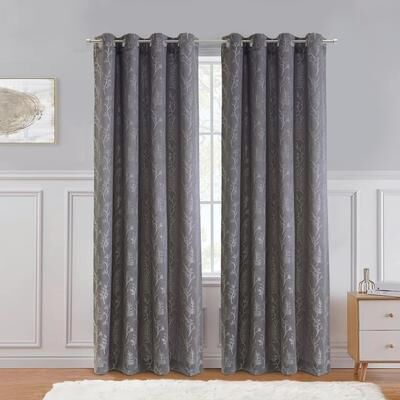
Habitat Botanica Light Filtering Grommet Curtain PanelCrafted with a botanical-inspired jacquard pattern, this curtain adds a touch of luxury and sophistication to any room. By bringing the beauty of nature indoors, it creates a serene ambiance.27,98 $*Shipping: 0,00 $Secure redirect to the provider


-
What is the structure of a lipid bilayer?
A lipid bilayer is composed of two layers of phospholipid molecules arranged with their hydrophobic tails facing inward and their hydrophilic heads facing outward. This structure creates a barrier that separates the interior of the cell from the external environment. The lipid bilayer is flexible and allows for the movement of molecules in and out of the cell through processes such as diffusion and facilitated transport. Proteins are often embedded within the lipid bilayer, helping to regulate the passage of specific molecules and ions. **
-
What is a glyco- and lipid-anchored protein?
A glyco- and lipid-anchored protein is a type of membrane protein that is attached to the cell membrane through either a glycosylphosphatidylinositol (GPI) anchor or a lipid anchor. GPI-anchored proteins are attached to the membrane through a complex glycolipid structure, while lipid-anchored proteins are attached through a lipid molecule such as a fatty acid or isoprenoid. These anchors allow the protein to be embedded in the cell membrane, where it can carry out its specific functions, such as cell signaling or cell adhesion. **
-
Why are lipid bilayers nearly impermeable to protons?
Lipid bilayers are nearly impermeable to protons because the hydrophobic interior of the bilayer repels the positively charged protons. Additionally, the polar head groups of the lipid molecules create a barrier that prevents the passage of protons. Furthermore, the presence of proteins such as ion channels and transporters in the lipid bilayer also regulate the movement of protons, making it difficult for them to pass through. Overall, the combination of the hydrophobic interior, polar head groups, and protein regulation make lipid bilayers nearly impermeable to protons. **
-
Why can ions not pass through the lipid bilayer?
Ions cannot pass through the lipid bilayer because the lipid bilayer is made up of hydrophobic tails that repel charged particles. This creates a barrier that prevents ions from freely diffusing across the membrane. Additionally, the lipid bilayer is a nonpolar environment, which is not conducive to the passage of charged ions. As a result, ions require the assistance of ion channels or transport proteins to facilitate their movement across the lipid bilayer. **


How do I solve this optimization problem?
To solve an optimization problem, you first need to define the objective function that you want to maximize or minimize. Then, identify the constraints that limit the possible solutions. Next, you can use mathematical techniques such as calculus, linear programming, or numerical methods to find the optimal solution that satisfies the constraints and optimizes the objective function. Finally, evaluate the solution to ensure it meets the desired criteria and make any necessary adjustments. **
How to solve mathematical optimization problems with constraints?
To solve mathematical optimization problems with constraints, one can use techniques such as linear programming, quadratic programming, or nonlinear programming. These techniques involve formulating the objective function and constraints mathematically, and then using optimization algorithms to find the optimal solution that maximizes or minimizes the objective function while satisfying the constraints. It is important to carefully define the constraints and objective function to ensure an accurate and meaningful solution. Additionally, software tools like MATLAB, Python's SciPy library, or commercial optimization solvers can be used to efficiently solve these problems. **
Top-Angebote
Products related to Veoli-Botanica-Lipid-Solve:
-
Uttermost Botanica Aged Brass BowlThis Stunning Cast Aluminum Leaf Bowl Is Finished In An Aged Brass That Brings Warmth And Sophistication To Any Decor. The Leaf Design Adds A Touch Of Nature-inspired Elegance, Making It Perfect As A Decorative Accent Or Functional Piece.247,20 $*Shipping: 0,00 $Secure redirect to the provider
-
York Wallcoverings Broadsands Botanica Coral WallpaperPattern Broadsands Botanica is a thoughtfully placed pattern of botanical leaves in a delicate medallion of greenery. This Broadsands Botanica Wallpaper measures approximately 20.5 inches wide by 33 feet long, covering About 56.4 square feet per roll.119,00 $*Shipping: 0,00 $Secure redirect to the provider
-
What are lipid biomembranes?
Lipid biomembranes are structures composed mainly of lipids that form the outer boundary of cells and organelles. These biomembranes are selectively permeable, allowing certain molecules to pass through while blocking others. They play a crucial role in maintaining the integrity and function of cells by regulating the transport of ions and molecules, as well as providing a platform for various cellular processes such as signaling and cell-cell interactions. Lipid biomembranes are dynamic structures that can change in composition and organization in response to environmental cues and cellular needs. **
-
How are lipid molecules formed?
Lipid molecules are formed through a process called esterification, where a glycerol molecule combines with fatty acids to form a triglyceride. This reaction involves the removal of water molecules, resulting in the formation of ester bonds between the glycerol and fatty acids. Lipid molecules can also be formed through other processes such as phospholipid synthesis, where phospholipids are formed by combining a glycerol molecule with two fatty acids and a phosphate group. These processes are essential for the synthesis of various lipid molecules that play important roles in cell structure, energy storage, and signaling. **
-
What is the structure of a lipid bilayer?
A lipid bilayer is composed of two layers of phospholipid molecules arranged with their hydrophobic tails facing inward and their hydrophilic heads facing outward. This structure creates a barrier that separates the interior of the cell from the external environment. The lipid bilayer is flexible and allows for the movement of molecules in and out of the cell through processes such as diffusion and facilitated transport. Proteins are often embedded within the lipid bilayer, helping to regulate the passage of specific molecules and ions. **
-
What is a glyco- and lipid-anchored protein?
A glyco- and lipid-anchored protein is a type of membrane protein that is attached to the cell membrane through either a glycosylphosphatidylinositol (GPI) anchor or a lipid anchor. GPI-anchored proteins are attached to the membrane through a complex glycolipid structure, while lipid-anchored proteins are attached through a lipid molecule such as a fatty acid or isoprenoid. These anchors allow the protein to be embedded in the cell membrane, where it can carry out its specific functions, such as cell signaling or cell adhesion. **
Similar search terms for Veoli-Botanica-Lipid-Solve
-
Bluebird Solve For Happy - Engineer Your Path To Joy by Mo GawdatSolve For Happy: Engineer Your Path to Joy By Mo Gawdat Description In 2001; Mo Gawdat; a remarkable thinker whose gifts had landed him top positions in half a dozen companies and who - in his spare time - had created significant wealth; realized that he was desperately unhappy. A lifelong learner; he attacked the problem as an engineer would; examining all the provable facts and scrupulously following logic. When he was finished; he had discovered the equation for enduring happiness. Ten years later; that research saved him from despair when his college-aged son; Ali - also intellectually gifted - died during routine surgery. In dealing with the loss; Mo found his mission: he would pull off the type of 'moonshot' that he and his Google [X] colleagues were always aiming for: he would help ten million people become happier by pouring his happiness principles into a book and spreading its message around the world. One of Solve for Happy's key premises is that happiness is a default state. If we shape expectations to acknowledge the full range of possible events; unhappiness is on its way to being defeated. To steer clear of unhappiness traps; we must dispel the six illusions that cloud our thinking (e.g.; the illusion of time; of control; and of fear); overcome the brain's seven deadly defects (e.g.; the tendency to exaggerate; label; and filter); and embrace five ultimate truths (e.g.; change is real; now is real; unconditional love is real). By means of several highly original thought experiments; Mo helps readers find enduring contentment by questioning some of the most fundamental aspects of their existence.4,99 £*Shipping: 1,99 £Secure redirect to the provider
-
Habitat Botanica Light Filtering Grommet Curtain PanelCrafted with a botanical-inspired jacquard pattern, this curtain adds a touch of luxury and sophistication to any room. By bringing the beauty of nature indoors, it creates a serene ambiance.27,98 $*Shipping: 0,00 $Secure redirect to the provider
-
"Botanica Art - 17.25"" x 17.25"" - Ballard Designs""This floral still life was inspired by a beautiful bouquet a friend sent to my mother after being in the hospital, Atlanta artist Mary Elizabeth Ellenburg recalls. ""Fresh-cut flower arrangements die so quickly and I wanted to preserve the happiness..."511,20 $*Shipping: 179,00 $Secure redirect to the provider
-
Why are lipid bilayers nearly impermeable to protons?
Lipid bilayers are nearly impermeable to protons because the hydrophobic interior of the bilayer repels the positively charged protons. Additionally, the polar head groups of the lipid molecules create a barrier that prevents the passage of protons. Furthermore, the presence of proteins such as ion channels and transporters in the lipid bilayer also regulate the movement of protons, making it difficult for them to pass through. Overall, the combination of the hydrophobic interior, polar head groups, and protein regulation make lipid bilayers nearly impermeable to protons. **
-
Why can ions not pass through the lipid bilayer?
Ions cannot pass through the lipid bilayer because the lipid bilayer is made up of hydrophobic tails that repel charged particles. This creates a barrier that prevents ions from freely diffusing across the membrane. Additionally, the lipid bilayer is a nonpolar environment, which is not conducive to the passage of charged ions. As a result, ions require the assistance of ion channels or transport proteins to facilitate their movement across the lipid bilayer. **
-
How do I solve this optimization problem?
To solve an optimization problem, you first need to define the objective function that you want to maximize or minimize. Then, identify the constraints that limit the possible solutions. Next, you can use mathematical techniques such as calculus, linear programming, or numerical methods to find the optimal solution that satisfies the constraints and optimizes the objective function. Finally, evaluate the solution to ensure it meets the desired criteria and make any necessary adjustments. **
-
How to solve mathematical optimization problems with constraints?
To solve mathematical optimization problems with constraints, one can use techniques such as linear programming, quadratic programming, or nonlinear programming. These techniques involve formulating the objective function and constraints mathematically, and then using optimization algorithms to find the optimal solution that maximizes or minimizes the objective function while satisfying the constraints. It is important to carefully define the constraints and objective function to ensure an accurate and meaningful solution. Additionally, software tools like MATLAB, Python's SciPy library, or commercial optimization solvers can be used to efficiently solve these problems. **
* All prices are inclusive of VAT and, if applicable, plus shipping costs. The offer information is based on the details provided by the respective shop and is updated through automated processes. Real-time updates do not occur, so deviations can occur in individual cases. ** Note: Parts of this content were created by AI.